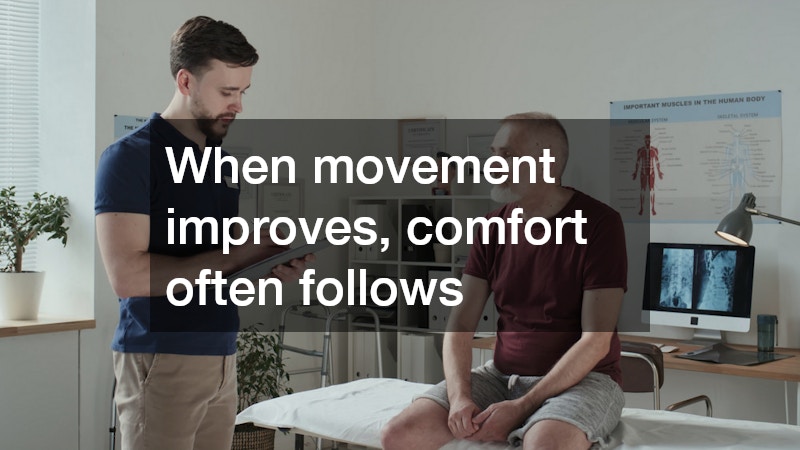

When pain, stiffness, weakness, or limited movement starts affecting daily life, it is easy to hope the problem will simply improve on its own. Sometimes rest helps, but many issues linger longer than expected or gradually become harder to ignore. That is often where physical therapy becomes a valuable next step. Rather than focusing only on temporary relief, this kind of care is meant to address how the body moves, functions, and responds to stress during everyday activities.
1. It Can Help You Move Better Before Small Problems Get Worse
One of the strongest reasons to begin care is to address movement problems early. A mild ache in the knee, recurring back tightness, or shoulder discomfort during routine tasks may not seem urgent at first. Still, when those symptoms continue, people often start changing how they sit, stand, walk, lift, or sleep without realizing it. Those compensations can place extra strain on other areas of the body and turn a manageable issue into a more disruptive one.
Starting physical therapy early can help identify those patterns before they become more serious. A therapist may look at strength, mobility, flexibility, posture, balance, and movement mechanics to understand what is contributing to the problem. From there, treatment is usually built around improving the way the body functions instead of masking symptoms alone. That can be especially helpful for people who want to stay active, keep working comfortably, or avoid letting a minor issue interfere with long-term routines.
Early treatment also gives people a better understanding of what their body needs. Some problems come from weakness, while others are related to joint stiffness, poor posture, repetitive strain, or limited coordination. When those factors are identified clearly, it becomes easier to work on the actual cause of the limitation. That kind of targeted support can make recovery feel more efficient and more practical.
2. It Supports Recovery After Injury, Surgery, or Physical Setbacks
Another important reason to start is recovery. Injuries, surgeries, and other physical setbacks often affect more than the specific body part involved. After a fracture, joint procedure, fall, or muscle injury, people may notice weakness, stiffness, swelling, reduced endurance, and fear of using the area normally again. Even when healing is progressing, it can still be difficult to know how much activity is appropriate or how to rebuild function safely.
Physical therapy helps guide that process step by step. Treatment plans are typically adjusted based on the stage of healing, the person’s goals, and the demands of daily life. In the beginning, care may focus on gentle mobility, pain reduction, and restoring basic movement. Later, the plan may shift toward strength, stability, coordination, and returning to more demanding tasks such as climbing stairs, exercising, lifting, or performing work duties.
This structured approach can be valuable because recovery is not always straightforward. A person may feel better one day and frustrated the next. Progress can happen gradually, and it often depends on consistent effort both during appointments and at home. With the right guidance, people are usually better equipped to rebuild function without pushing too far too soon. That can reduce uncertainty and help them return to normal routines with more confidence.
3. It Can Improve Daily Comfort and Independence
Many people think this kind of care is only for athletes or people recovering from major medical events. In reality, one of the biggest benefits is how much it can improve ordinary daily life. Discomfort while standing at the sink, difficulty getting up from a chair, trouble walking longer distances, or limited ability to bend and reach can all affect independence. These issues may not always seem dramatic, but they can wear a person down over time.
Physical therapy often focuses on the specific activities a person needs to do every day. That might include walking more comfortably, improving balance, lifting safely, getting in and out of bed more easily, or moving with less stiffness in the morning. When treatment connects directly to real-life tasks, the results often feel more meaningful because they support function where it matters most.
Physical therapy can also help people feel less hesitant about movement. When pain or weakness has been present for a while, many people become cautious, and that caution is understandable. Still, avoiding movement altogether can sometimes lead to more weakness and more limitation. Guided treatment helps restore trust in the body by building strength and mobility in a controlled, purposeful way. That renewed confidence can make it easier to stay active and maintain independence.
Starting physical therapy is not only about reacting to pain. It is also about improving how the body functions now and protecting long-term mobility in the future. Whether someone is dealing with a newer issue, recovering from a setback, or trying to make daily life feel more manageable, this kind of care offers a practical path forward. When movement improves, comfort often follows, and everyday routines can start to feel much more within reach.